Pages

воскресенье, 23 марта 2014 г.

Theatre. Chapters 7-10.


I. Find the following words and phrases in the text and translate them into Russian:

1. placidity – спокойствие, безмятежность, благодушие
2. to make frantic scenes – закатывать безумные сцены
3. to give sb. a look of scorn – бросать на кого-либо презрительный взгляд
4. lavishness – щедрость, расточительность
5. to know how to pull strings adroitly – искусно пускать в ход связи
6. to fall out of love - разлюбить
7. close-cropped hair – коротко стриженные волосы
8. to resist an inclination – сопротивляться желанию
9. weather-beaten skin – обветренная кожа
10. coltish grace – щенячья грация
11. to be on active service – находиться в действующей армии
12. confinement - роды
13. to run a theatre – управлять театром
14. effusive – несдержанный, чрезмерный
15. virile air – сильный дух
16. to set one's mind to smth. – решить что - либо
17. Disconcerting - замешательство
18. it's a knock out – сногсшибательный успех
19. amiability - дружелюбие
20. affable manner - учтивость
21. to exercise great ingenuity in (doing) smth. – проявлять в чем-то великую изобретательность
22. to be unperturbed – быть невозмутимым
23. shrewdness - проницательность
24. to grizzle – седеть, капризничать
25. it's a mere commonplace – это банально, избито
26. exorbitant – непомерный, чрезмерный
27. to be conciliatory – быть умиротворяющим
28. to foster one's career – способствовать продвижению чьей – либо карьеры
29. prosiness – прозаичность, банальность
30. acumen – сообразительность, проницательность
31. to have one's face lifted – делать подтяжку
32. it's no good crying over spilt milk – слезами горю не поможешь
33. to have little flirtations – заводить легкие интрижки
34. masseuse - массажистка
35. gossip column – светская хроника
36. the world of make-believe – воображаемый мир

II. Answer the following questions:

1. What did Michael and Julia do when the war broke out? 
They both acted and then Michael enlisted and soon became an officer.
2. Why do you think Michael enjoyed the war? 
He was very popular in the regimental mess and the officers accepted him at once since he had the manner and way of thinking of the professional soldier. So, it was inevitable that he should get on the staff of some general.
3. Do you think love is important for a successful family life?
 Would you share your point of view on this problem with your fellow students?
Of  course, love is very important for a successful family life, moreover, it’s the key factor, which keeps all the members of this family together.
 4. How did it happen that Julia fell out of love with Michael?
When he returned from the war, she understood that he wasn’t that attractive young boy with whom she fell in love one day, because he grew older and lost most those features which seemed so inviting for Julia.
 5. How did Michael manage to find the money to rent a theatre? What was the theatre called? Who was in the partnership with him?
 Jimmy Langton helped the by giving the letter of reference, so one old woman, Dolly de Vries agreed to give them money to open their own theatre. When they had been in management for three years they were sufficiently well established for Michael to be able to borrow from the bank enough money to buy the lease of a theatre that had just been built. After much discussion they decided to call it the Siddons
Theatre.
6. Why was Julia against Michael's taking up directing? 
Because he possessed poor imagination, to cut a long story short, his ideas were banal and Julia was not sure that he would have authority over the cast.
7. What kind of director was Michael? 
He was thorough; he worked hard. Julia, strangely enough, felt that he was getting more out of her than any other director had done. He knew what she was capable of, and, familiar with her every inflection, every glance of her wonderful eyes, every graceful movement of her  body. With the cast he was at once conciliatory and exacting. When tempers were frayed his good humour, his real kindliness, smoothed things over. Authors liked him because, being unimaginative, he was quite sure what they meant he was obliged to listen to them.
forced to let the plays speak for themselves and often not being
8. What irritated Julia in Michael more and more? How did he change in Julia's eyes? 
It seemed to her that none but she knew what it was like to live with a man who was such a monster of vanity. His complacency when he had beaten an opponent at golf or got the better of
someone in a business deal was infuriating. He gloried in his artfulness. He was a bore, a crashing bore. He liked to tell Julia everything he did and every scheme that passed through his head; it had been charming when merely to have him with her was a delight, but for years she had found his prosiness intolerable. As a youth he had taken his beauty for granted: now he began to pay more attention to it and spared no pains to keep what was left of it. It became an obsession. He was prudent, and all he wanted was admiration.
9. Why was Julia sad when she thought of her married life? 
Because she couldn’t understand how she managed to fall in love with such a man, who had changed so much and whom she didn’t love.
10. Why was Michael happier than he had been before?
Because he was famous and many people adored him.
 11. Julia's dresser and maid was a Cockney, wasn't she? Please prove it using the examples from the text.
'ealth and strength."
I'm young enough to dress 'er. And maid 'er.
It'd only fidget me to 'ave a lot of elephant's tusks in me mouth."( Dropping “h”)
12. Who was the unknown man who sent flowers to Julia? Why did she write him a thank you note? 
It was Thomas Fennel. She wrote a note, because she was naturally polite and it was, besides, a principle with her to answer all fan letters. That was how she kept in touch with
her public.

III. Make up a list of words and phrases describing Michael's appearance and character. Say what you think of him.

Appearance:

Before the war:

• the glorious beauty of his youth
• wonderfully handsome
• very good figure
• a great mass of curling chestnut hair
• a wonderful skin
• large deep blue eyes,
• a straight nose
• small ears
• the best-looking actor on the English stage
• The only thing that slightly spoiled him was the thinness of his mouth

After the war

• close-cropped hair
• weather-beaten skin
• his movements were set
• he lost his cotlish grace
• his beauty was stricken as with a mortal sickness

Character:

• placidity
• practical mind
• a good-humoured smile on his handsome face
• gentlemanly push
• thrift
• considerable organizing capacity
• Though not passionate he was affectionate
• The breeziness he had acquired in the army was effective.
• well set-up, normal, high-spirited fellow
• He never attempted to play anyone but himself
• worked hard and was amenable to direction
• made his plans carefully
• perfectly faithful
• conscientious, attentive, scrupulous
• selfless (for the sake of Julia)
• conceited
• a crashing bore

To my mind, Michael is rather interesting character. He possesses a lot of good traits and the only his drawback is his vanity. He is very sincere, because he can’t perform love if he isn’t in love. He does everything to make his wife happy, but at the same time, he doesn’t love her and their points of view concerning a happy married life are different.

IV. Comment on the phrase from chapter 9: "Roger had been entered for Eton within a week of his birth." Comment on it. Give a short presentation on public schools in Britain. 

Well, it’s not a secret that to send a child to some famous public school, parents enroll them long before their actual study, because public schools are considered to be very prestigious and they give a good opportunity to prepare pupils for entering the best universities in the UK.

Public schools provide elite education, which is gotten in the following way. At first children at the age of 11 go to a prep school, before which they take Common Entrance Examination and then to an independent school, where they take SAT at 14, and a bit later GSCE and A-level. Students stay there up to 18.

The most famous schools in Britain are private boarding schools, such as Eton College, Harrow School, Rugby School, and Winchester School. These famous private schools, founded during the Middle Ages, are theoretically open to the public, but in reality are attended by those who can afford the fees. Many of Britain’s leaders have attended these private schools, which cater to the wealthy and influential but also offer some scholarships to gifted poorer children. Local authorities and the central authority also provide assistance to some families who are unable to pay the fees. Only a small percentage of the population can attend these ancient and highly prestigious schools. A variety of other schools are also private, including kindergartens, day schools, and newer boarding schools. Private schools that take pupils from the age of 7 to the age of 11, 12, or 13 are called preparatory schools. Private schools that take older pupils from the age of 11, 12, or 13 to 18 or 19 are often referred to as public schools. Only 7 percent of British students attend private school.


VI. Give a summary of chapters 7-10. (in written form)

When the war broke out, Michael enlisted at one and then became an officer. Julia was pregnant. When Michael returned from front, they moved to a new house and opened their own theatre due to Dolly de Vries, who gave them money. Before one of her performances, Julia got flowers from an unknown admirer and wrote him a thank-you letter.




воскресенье, 9 марта 2014 г.

Theatre. Chapters 3 - 6.

Task I

·         asset - [USUALLY PLURAL] something such as money or property that a person or company owns; a major benefit
·         a sumptuous supper – an expensive supper
·         extravagance - [UNCOUNTABLE] the practice of spending a lot of money, especially more than you should; [UNCOUNTABLE] the extreme, unusual, or unreasonable quality of something
·         thrift - [UNCOUNTABLE] the practice of spending money carefully so that you do not waste any
·         to remonstrate - to argue with, complain to, or criticize someone about something
·         equanimity - a calm mental state when you deal with a difficult situation
·         be at a loose end - be in an uncertain or confused condition; be without any particular plans; be in unsettled position; be without any specific occupation
·         to jeopardize - to risk damaging or destroying something important
·         alacrity – enthusiasm
·         susceptible to - easily influenced or affected by something
·         obsequious - too keen to please someone, in a way that does not seem sincere
·         a retainer - a payment made to someone such as a lawyer so that they will be available to do work for you when you want them; a reduced rent that you pay to keep your house, flat etc .when you are not living in it, so that you can live in it when you return; OLD-FASHIONED a servant, especially one who has worked for someone from a high social class for a long time

Task II

·         "I could not love thee, dear, so much, loved I not honour more” (TO LUCASTA, GOING TO THE WARS by R. Lovelace) – Michael quoted it for Julia to underline that he was an honest man, who wasn’t going to misuse her love.
·         "Lord, what fools these mortals be" (“A Midsummer Night’s Dream” by W. Shakespeare) – Jimmie said it about Julia, who loved Michael, the man, who didn’t suit her. So this quotation underlines that people are not able to control their feelings.

Task III

The metaphor “she's a millstone round his neck” means that a wife, especially an actress, becomes a burden for a young actor’s career. This phrase belongs to Michael, who said it in general while talking to Julia, not meaning somebody in particular.

Task IV

·         “He was too modest to resent an unfavourable criticism”.  This phrase was written about Michael, who was able to stand any criticism in his address.
·         “…after all he was born a gentleman." – it was said about Michael, whose parents didn’t approve his occupation as an actor.
·         “He's going to be a flop." – it was said about Michael, who was an awful actor and was going to fail in  America.
·         "I suppose it's beastly of me," she thought, "but thank God, thank God." – Julia thought that it was bad of her to be glad that Michael failed, but she wanted him to do it, because she loved him and wanted him to be nearby.

Task VI

The author uses the so-called “stream of consciousness” when the reader understands Julia’s thoughts.

Task VII

1. Who was Jimmie Langton and what role did he play in Julia's and Michael's lives? A man called James Langton was running a repertory theatre at Middlepool that was attracting a good deal of attention. Due to him, Julia and Michael got acquainted and Julia became a brilliant actress.
2. When did Julia and Michael join the Middlepool Theatre Company? Michael had been with Benson for three years and then asked Langton to employ him. Julia joined his theatre company  after playing second roles, when he noticed her great talent.
3. How did Julia and Michael get to know each other? They played in the same play and began to walk together and meet to discuss their roles.
4. What did Julia like about Michael?  She liked that he was beautiful, careful and thrifty.
5. What did Michael think of good looks and decent families? He thought that it was more important to have a decent family than a good look.
6. How did Julia feel about her family? She was a bit ashamed, because her father was a vet.
7. What were Michael's views on marriage?  He considered that it was silly of a young actor to get married.
8. Why did Michael find Julia extravagant?  Because she spent a lot of money.
9. What did Michael read newspaper reviews for? Did Julia share his views? He read these reviews to know critics’ opinions about him. Julia didn’t share his views, she thought that he was a bad actor, though very beautiful.
10. Who invited Julia to Michael's house for the Holy Week?  Michael’s mother.
11. Did Michael's father meet Julia's expectations?  No, she expected him to be more stern.
12. What impression did Julia produce on Michael's parents? They liked her very much.
13. Was the proposal expected by Michael's parents?  Yes, it was.
14. What professional offer did Michael receive and who facilitated this? He was invited to America due to Jimmie Langton.
15. What steps did Julia take upon finding Michael was leaving for America?  She asked Jimmie to help her.
16. Was Michael a success in America?  No, he wasn’t.
17. Did Julia keep in touch with him while he was away? Yes. She wrote him lots of letters.
18. Was Julia eager to meet Michael straight at the station? Yes, she was.
19. What were Michael's impressions after staying and working in America? He wasn’t disappointed very much, because he saved dome money for their marriage.
20. What was Michael going to do in England and what were his prospects? He was going to marry Julia and open their own theatre.


Task VIII

Julia remembered how she fell in love with Michael and tried to make him marry her. He asked his mother to invite her to visit them then he popped the question. After that he was invited to work in America, Julia was very disappointed and tried to prevent it. Eventually he worked there for one season and saved some money for their marriage.


понедельник, 24 февраля 2014 г.

Theatre. Chapters 1-2.

I. Allusions.

  1. Literary:
  • Beatrice – the protagonist in in Shakespeare’s  play “Much Ado About Nothing”
  • Romeo - the protagonist in in Shakespeare’s  play “Romeo and Juliet”
  • Henrik Johan Ibsen (20 March 1828 – 23 May 1906) was a major 19th-century Norwegian playwright, theatre director, and poet. He is often referred to as "the father of realism" and is one of the founders of Modernism in theatre. His major works include Brand, Peer Gynt, An Enemy of the People, Emperor and Galilean, A Doll's House, Hedda Gabler, Ghosts, The Wild Duck, Rosmersholm, and The Master Builder. He is the most frequently performed dramatist in the world after Shakespeare.
  • George Bernard Shaw (26 July 1856 – 2 November 1950) was an Irish playwright and a co-founder of the London School of Economics. Although his first profitable writing was music and literary criticism, in which capacity he wrote many highly articulate pieces of journalism, his main talent was for drama, and he wrote more than 60 plays. He was also an essayist, novelist and short story writer. Nearly all his writings address prevailing social problems, but have a vein of comedy which makes their stark themes more palatable. Issues which engaged Shaw's attention included education, marriage, religion, government, health care, and class privilege.
  • Hermann Sudermann (September 30, 1857 – November 21, 1928) was a German dramatist and novelist.
  • John Galsworthy ( 14 August 1867 – 31 January 1933) was an English novelist and playwright. Notable works include The Forsyte Saga (1906–1921) and its sequels, A Modern Comedy and End of the Chapter. He won the Nobel Prize in Literature in 1932.
2. Artistic
  • Sarah Siddons (Kemble ) (5 July 1755 – 8 June 1831) was a Welsh actress, the best-known tragedienne of the 18th century. She was the elder sister of John Philip Kemble, Charles Kemble, Stephen Kemble, Ann Hatton and Elizabeth Whitlock, and the aunt of Fanny Kemble. She was most famous for her portrayal of the Shakespearean character, Lady Macbeth, a character she made her own, and for famously fainting at the sight of the Elgin Marbles in London.
  • Jean-Marc Nattier (March 17, 1685 – November 7, 1766), French painter, was born in Paris, the second son of Marc Nattier (1642–1705), a portrait painter, and of Marie Courtois (1655–1703), a miniaturist. He is noted for his portraits of the ladies of King Louis XV's court in classical mythological attire.
  • Sir Thomas Lawrence  (13 April 1769 – 7 January 1830) was a leading English portrait painter and president of the Royal Academy.
  • Benoît-Constant Coquelin (23 January 1841 – 27 January 1909), known as Coquelin aîné ("Coquelin the Eldest"), was a French actor, "one of the greatest theatrical figures of the age."
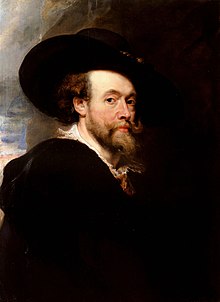
  • Sir Peter Paul Rubens (28 June 1577 – 30 May 1640), was a Flemish Baroque painter, and a proponent of an extravagant Baroque style that emphasised movement, colour, and sensuality. He is well known for his Counter-Reformation altarpieces, portraits, landscapes, and history paintings of mythological and allegorical subjects.
  • Edmund Kean (4 November 1787 – 15 May 1833) was an English actor, regarded in his time as the greatest ever.
  • Sarah Bernhardt (c. 22/23 October 1844 – 26 March 1923) was a French stage and early film actress, and was referred to as "the most famous actress the world has ever known." Bernhardt made her fame on the stages of France in the 1870s, at the beginning of the Belle Epoque period, and was soon in demand in Europe and the Americas. She developed a reputation as a serious dramatic actress, earning the nickname "The Divine Sarah."
  • Mounet-Sully (February 28, 1841 – 1916), a French actor, was born at Bergerac. His birth name was Jean-Sully Mounet: "Mounet-Sully" (without the "Jean") was a stage name.
  • Eleonora Duse (3 October 1858 – 21 April 1924) was an Italian actress, often known simply as Duse.
3. Others
  • Thomas Chippendale (probably born at Otley, West Riding of Yorkshire) was a London cabinet-maker and furniture designer in the mid-Georgian, English Rococo, and Neoclassical styles. In 1754 he published a book of his designs, titled The Gentleman and Cabinet Maker's Director. The designs are regarded as reflecting the current London fashion for furniture for that period and were used by other cabinet makers outside London.
  • The Comédie-Française or Théâtre-Français is one of the few state theatres in France. It is the only state theatre to have its own troupe of actors. The company's primary venue is the Salle Richelieu. The theatre is part of the Palais-Royal complex and located at 2 rue de Richelieu on the Place André-Malraux in the 1st arrondissement of Paris.
  • The Royal Academy of Dramatic Art (RADA) is a drama school located in London, England. It is one of the oldest drama schools in the United Kingdom, having been founded in 1904, and is generally regarded as one of the most prestigious drama schools in the world.
All the allusions are used to create the special atmosphere of theatre, splendor and to underline the epoch, in which the action takes place.

II. Words and phrases

• Complacency - a complacent attitude or way of behaving
• Three times running - following or happening one after the other
• Filthy – very dirty, very unpleasant, offensive
• Supercilious - a supercilious person behaves as if they think they are better or more important than everyone elseж; a supercilious manner/smile/attitude
• Military bearing - (1) The element of outward appearance of a serviceman (clean and correctly arranged uniform, properly worn and adjusted equipment, manner of behavior in and out of formation) imparting a brisk military outward appearance to the individual and the entire detachment.
(2) A part of individual drill instruction with the purpose of inculcating the soldier with the habits of behavior in and out of formation and the ability to execute the drill manuals quickly and dexterously. This instruction also serves the purpose of developing in the soldiers unity, uniformity, and coordination during actions in motion, with arms, and in machines. The soldier’s bearing is achieved by a combination of drill, physical training, and sports.
• Natural flamboyance – expected behaving or dressing in a way that deliberately attracts attention 
• Stupendous - very impressive, large, or surprising
• Staggered - very surprised and shocked
• Natural homage - something that someone does or says in order to honestly show respect or admiration
• Entanglement - the process of becoming entangled in something or a complicated situation or relationship
• Concubinage is an interpersonal relationship in which a person (usually a woman) engages in an ongoing sexual relationship with another person to whom they are not or cannot be married.
• Languorous - characterized by or producing languor (the calm or pleasant feeling that you have when you are tired and relaxed)
• Flippant - treating a serious subject or situation in a way that is not serious, especially when this annoys other people
• Rejoinder - a quick reply, especially one that is clever or rude
• To risk smth - to do something that makes it possible for something important or valuable to be destroyed, damaged, or lost
• A quick study - one who is able to memorize something easily and quickly or is able to understand and deal with something easily and successfully.

III. Character sketches

Julia Lambert

Julia was 46 year-old actress, who said that she was not beautiful and even not pretty (however, she boggled, because she liked to look at her reflection in the mirror and view her pictures). Coquelin said that she possessed “beaute  du  diable”. Her figure was perfect, her legs were long and she was quite tall for a woman and she had a “rubber face”, which was so important for her profession, since she was able to show any emotion. Julia wore the best dresses and was famous for her brilliant outlook. She often smiled, her gestures were graceful and delicate. She was a real actress, who perceived life as a theatre, where she had to impress everybody. She originated from a middle – class family, due to which she found herself in France and learned to speak French “as a real French”. There she got acquainted with an old actress, who taught her the ABC of the performing art. When Julia was sixteen, she entered Royal Academy of Dramatic Art. After that she performed some secondary roles. She was lucky to meet Jimmie Langton, who promised to make a brilliant actress out of her in three years and he kept his word. She became very famous and belonged then to higher society. Even the description of her house underlines it. We see a lot of silver things, flowers, expensive furniture, etc. Julia is a very purposeful person, since she worked hard to make her dream of being a great actress come true, At the same time she is adventurous, since she agreed to change the company after the conversation with a person, who said that she possesses everything to become the best actress, but she wasn’t able to do anything proper yet and offered her a salary, which was even lower that her previous one. Julia was flirty, because even having a husband she flirted with other men just out of curiosity and the most important thing about Julia was that she was aware of her worth. She loved and admired her husband and treated the rest of the world quite leniently, because she knew how famous and beautiful their family was and considered that everybody was considered to love them. The most interesting thing about her manner of speaking it was different when she talked to people and to herself. She “didn’t mince the words” when she was  just thinking. Her voice was low, deep and beautiful impressed people very much and her articulation was so precise that every word was heard at the last seats. In my opinion, her industry ability to risk are definitely worth approval since she wouldn’t have earned such a fame without them. However, I disapprove her lenient attitude to other people and her attempts to make a young man fall in love with her, because she was already married. So, now we can say that her life’s credo is not to live life, but to perform it.
Michael Gosselyn

This man was Julia’s husband. He came from the upper – class society ( his education gives us a hint to think so). He was very beautiful. The author describes him in the following way: He still had at fifty-two a very good figure. As a young man, with a great mass of curling chestnut hair, with a wonderful skin and large deep blue eyes, a straight nose and small ears, he had been the best-looking actor on the English stage. The only thing that slightly spoiled him was the thinness of his mouth. He was just six foot tall and he had a gallant bearing. It was his obvious beauty that had engaged him to go on the stage rather than to become a soldier like his father. Now his chestnut hair was very gray, and he wore it much shorter; his face had broadened and was a good deal lined; his skin no longer had the soft bloom of a peach and his colour was high. But with his splendid eyes and his fine figure he was still a very handsome man. Since his five years at the war he had adopted a military bearing, so that if you had not known who he was (which was scarcely possible, for in one way and another his photograph was always appearing in the illustrated papers) you might have taken him for an officer of high rank. He boasted that his weight had not changed since he was twenty, and for years, wet or fine, he had got up every morning at eight to put on shorts and a sweater and have a run round Regent’s Park.”. Michael was similar to his wife, he had a lot of fans, who loved him, but he didn’t allow himself to lose his head. He wasn’t interested in other people but his family, we can easily understand it when he said that he didn’t want to know even the name of their new acquainted, and this thing I disapprove. His life’s credo was: 'no one attacks me with impunity', so we can say that he lived in his castle and guarded himself and his family from everybody. His world must remain his one. Michael started as an actor, but then understood that it wasn’t his calling. So, he became the theatre’s owner. He was very rich and possessed a good taste, though he  preferred not to mention about designers, who helped him to thing up the interior. His voice was thin, thus he wasn’t good enough as an actor, however, it was pleasant to talk to him due to his brilliant manners. Michael was polite, but complacent. At the same time he was straight and sincere, since when he performed a lover, he wasn’t able to kiss a girl, whom he didn’t love. So, he was graceful, well – educated, but cold and clever. I think that fact that he was a bad actor, made him a good man, because if he said or did something, it was sincere, so, in this connection, we can say that he really loved his family. 


IV. Summary

When Julia Lambert came to her husband, she saw a young stranger, who turned out to be their new accountant. Michael invited him to lunch, though he didn’t even know his name. That young man adored Julia and visited her performances several times. At the end of lunch she gave him her photo. While looking through the pictures, she remembered how she began her career and also how she met Michael. Their way to present life was hard and risky. She graduated from Royal Academy of Dramatic Art , performed several secondary roles and then was lucky to meet Jimmie Langton, who promised to make a brilliant actress out of her in three years and he kept his word. In his theatre she met Michael, whom Langton also invited to his company.

четверг, 19 декабря 2013 г.

A Farewell to Arms

A Farewell to Arms is a 1957 American DeLuxe Color CinemaScope drama film directed by Charles Vidor. The screenplay by Ben Hecht, based in part on a 1930 play by Laurence Stallings, was the second feature film adaptation of Ernest Hemingway's 1929 semi-autobiographical novel of the same name. It was the last film produced by David O. Selznick. This film version, A Farewell to Arms starred Rock Hudson as Frederick Henry, Jennifer Jones as Catherine Barkley, Vittorio De Sica as Major Alessandro Rinaldi, etc. So, now let’s see what this film is about.

Henry, an American officer, who served in Italy during World War I, fell in love with a British nurse Catherine. When he was wounded in the knee and got to the hospital, their relationships developed. Then, being on the front again, Henry killed an engineering sergeant for insubordination. After that, he was caught by the "battle police", who executed officers for the "treachery", but he managed to escape. Together with Catherine they went to Switzerland, where she gave birth to a dead child and then died herself.

As for the acting, I should say that all the actors were great. They got used to the war and performed their characters very vividly. It made me watch this film with great interest since Rock Hudson and Jennifer Jones looked exactly like I imagined Henry and his beloved (especially J. Jones, who in her part of Catherine was as irritating and too sweet as the protagonist in the book).

Directing was also on high. There were no unnecessary episodes in the film. Every scene was important for the whole perception of the development of relationships between Henry and Catherine.

To crown it all, I’d like to underline that this film impressed me greatly. It really made me think of love which was born during the war, whether it was true feeling or just a temporary love affair. So, this story gives us a real example of difficult relationships between man and woman in unusual circumstances.


среда, 18 декабря 2013 г.

In Love and War (1996 film)

In Love and War is a 1996 romance drama film based on the book, Hemingway in Love and War by Henry S. Villard and James Nagel, starring Mackenzie Astin, Chris O'Donnell, Sandra Bullock, and Margot Steinberg. This film takes place during World War I, and is based on the World War I experiences of the writer Ernest Hemingway. It was directed by Richard Attenborough. The film was entered into the 47th Berlin International Film Festival.

A twenty-six –year old American nurse Agnes Kurovsky arrived to Italy as a Red Cross volunteer. There she met a young lieutenant Earnest Hemingway. They fell in love and were going to marry after the war, but circumstances had changed. Henry went to Italy and Agnes stayed in Italy, where a rich doctor proposed her to marry him. She almost agreed and wrote about it to Henry. It became the reason for their separation. Later the girl came to Henry and said about her feelings to him, but his pride made him refuse of his love.

As for the acting, I should say that all the actors were great. They got used to the war and performed their characters very vividly. It made me watch this film with great interest since Sandra Bullock and Chris O'Donnell looked exactly like I imagined Henry and his beloved.

Directing was also on high. There were no unnecessary episodes in the film. Every scene was important for the whole perception of the development of relationships between Henry and Agnes.

To crown it all, I’d like to underline that this film impressed me greatly. It really made me think of love which was born during the war, whether it was true feeling or just a temporary love affair. Somebody can condemn Agnes for a moment of weakness, when she almost agreed to marry an Italian doctor. However, if we explore the situation more carefully, we will understand that everything is not as simple as it seems to be. She was a wise girl, who understood all the responsibility of her choice and he was just a young passionate proud boy. So, this story gives us a real example of difficult relationships between man and woman in unusual circumstances.


вторник, 3 декабря 2013 г.

MP3 AUDIO 5.1


1.       You’ll hear five speakers talking about problems they or their relatives face while studying. Fill in the chart with the information given in the recording. Be especially precise with the column “Your solution to the problem”; here, you’re supposed to give your personal advice to avoid or ease the problems mentioned by the speakers.

Speaker
Problem
Signs of the Problem
Your Solution to the Problem
1
Examination

Testing on facts and an ability to learn

To my mind, testing on an ability to learn is wiser than just checking if a student knows something or not. Our memory is of rather short duration, so we tend to forget facts learnt just before exams. So, if a person is able to learn, they’ll succeed in life.
2

Preparation for A-levels exams
tired face, sleepless nights etc.
It’s a common problem for most students preparing for exams. To my mind, students are just to be self-disciplined and schedule their time.

3

Preparation for entrance exams

loss of weight, black rings under eyes, little sleep

If a person doesn’t sleep and eat enough they’ll lose their energy. For this it’s necessary to take breaks and begin to learn information long before the exam itself.
4

Lack of confidence

surprise when getting a high grade

Well, here we deal with the fact that a guy didn’t expect himself to be clever, therefore we can say that he didn’t prepare for his exam carefully enough, so I think everybody should believe in their abilities and try best to prepare for an exam.
5

Assessment

use of technologies, getting results faster; on-line tests

Well, on-line tests are only useful to get results fast enough, but to understand a student and their way of thinking is hardly possible in this case.


2.       Have you ever experienced problems while studying?  What were these problems like? How did you cope with them?

Of course, I did. I suffered from the lack of time while preparing for my exams, because I was not able to schedule my studies properly enough. So, I just made myself learn all the material during several days. Of course, it was hard, but there was no other way out.


3.       What are other difficulties that contemporary university students face while studying? When do the problems usually occur? Are there special stresses that cause them? Do you agree that the quality learning is “the travel of hardships”? Give account of about 100 words on the questions mentioned.

Contemporary students usually deal with such problems as lack of time, large amount of homework and sometimes misunderstanding among peers and between teachers and students. These problems are, I’d say, permanent. Of course, we understand that if we do many tasks we master our skills, but where are we supposed to get so much time to do it? So, eventually, I agree that challenges are necessary to raise a strong personality, who will be able to cope with mental, psychological and physical difficulties, because only when we struggle to become somebody valued, we achieve high results. Thus, we are to work hard without complaining.


MP3 AUDIO 5.2


Listen to a talk given by a university advisor to a group of students and answer the following questions:
1.       What is the standard grading system in the USA?
This system includes such grades as A,B,C,D,F
2.       What are the ‘special grades’ that the speaker mentions in the recording?
They are S (satisfactory) and U (unsatisfactory)
3.       Comment on the standard grading system in your country?
In my country they use a standard five-point grading system. (5-excellent, 4-good, 3-satisfactory, 2-fail )
4.       Do schools and colleges practice non-standard grading systems? What are they?
Yes, they do. For example, at Russian primary school pupils may get stars, suns, clouds or something like that instead of marks.
5. Give examples of other grading systems throughout the world? Which of them do you think are efficient for the students’ academic assessment?


China
Below are the percentages and their grade and GPA equivalents
University
Percentage
Grades
GPA
80–100
A
3.7-4.3
60–79
B
2.3-3.3
50–59
C
1.7-2.3
40–49
D
1.3-1.0
Below 40
F
0

India

Until high school, an averaged percentage is provided. A percentage over 90 is considered excellent; between 70-89 is considered to be 'first division'; between 50-69 is considered to be 'second division',between 40-49 is considered to be pass; though these terminologies and classifications depend on the 'board of education'.
Universities here follow Percentage System and 10 point GPA System. The Percentage System works as : Maximum Marks:100, Minimum Marks: 0, Minimum Marks Required for Passing: 35. 100-91% Considered Excellent,75-90% Considered Very Good, 55–64% considered good, 45–55% considered fair, 41–44% considered Pass, 0-40% considered fail. A percentage above 65% is referred as 1st Division and indicates high intellectual level. Some Universities follow weighted average pattern to calculate percentage: 1st and 2nd Semester–40% of the aggregate marks, 3rd and 4th Semester-60% of the aggregate marks, 5th and 6th Semester-80% of the aggregate marks, 7th and 8th Semester-100% of the aggregate marks. The 10 point GPA is categorized as follows: 10-9.1 (O ( out of standing ) or A+)- Best, 9-8.1 (A)-Excellent, 8-7.1 (B+)-exceptionally good, 7-6.1 (B)-very good, 6-5.1 (C+)- good, 5-4.1 (C)- average, 4-3.1 (D+)-fair, 3.1-2 (D)- Pass, 2-0 (E+-E)-fail. A GPA of over 7 is generally considered to be an indication of a strong grasp of all subjects.
Percentage
Eq
U
Classification
90 to 100
4.5
O or (A+)
Outstanding
70 to 89
4.0
A or
Distinction / First class**
50 to 69
3.5
B+
Second Class
40 to 49
3.0
B
Pass Class
< 39
2.0
C
Fail
·         ** Some institutes with difficult curriculum and tough scoring give 70% scoring as Distinction / Honors.

Japan
In Japan, most higher education institutions give grades on a scale from 0–100, but a few universities apply letter grades. While for years an "A" grade range was from 80 to 100 points, some schools (for example, at Kurume University) have started to give the 90 to 100 point range a special grade to indicate excellence.A failing grade is generally called an "E", though some institutions use "F".
Scale
Letter Grade
90-100
Excellent (AA, or T)
80-89
A
70-79
B
60-69
C
0-59
Fail (E or F)

South Korea
Middle School (7–9th grade)
Points are the student's raw score in midterms and finals (out of 100).
Points
Grades
90–100
A
80–90
B
70–80
C
60–70
D
0–60
E
High School (10–12th grade)
Percentage is the students' relative position among other students taking same subject (100% is the highest, 0% is the lowest).
Percentage
Grades
96–100
1등급 / Grade 1
89–96
2등급 / Grade 2
77–89
3등급 / Grade 3
62–77
4등급 / Grade 4
40–61
5등급 / Grade 5
23–40
6등급 / Grade 6
11–23
7등급 / Grade 7
4–11
8등급 / Grade 8
0–4
9등급 / Grade 9

Austria
In Austria, grades from 1 to 5 are used.
Grade
Percentage
Translation
1 (Sehr gut)
100–90
Excellent
2 (Gut)
89–80
Good
3 (Befriedigend)
79–64
Satisfactory
4 (Genügend)
63–51
Sufficient
5 (Nicht genügend)
50–0
Insufficient
The formalized overall grade in Austria is "pass with distinction" (mit ausgezeichnetem Erfolg bestanden), which is given for excellent performance (average of 1.5 and better, no grade below 3) and "pass" (Bestanden, no grade below 4).
If someone is given a "pass with distinction" in his Matura, Diploma and PhD, all curricula absolved in the regular duration time he can have a 'promotio sub auspiciis presidentis rei publicae', (literally "under the auspices of the President of the Republic", meaning that the Federal President will personally attend the graduation ceremony), which is the highest honor in Austria only achieved by 1 out of 2500 graduates (.04%) yearly.
Generally speaking, a cumulative Grade Point Average does not exist in the Austrian educational system and therefore has little relevance in the local job market.

France
In France, schools grades typically range from either 0 (worst) to 20 (best) (or, sometimes, from 0 (worst) to 10 (best)). A mark below the average (10 out of 20 or 5 out of 10, depending on the scale) is usually a fail. For the French National High School Level (baccalauréat), a grade of 8–10 typically gives the right to take an additional oral exam in order to try to improve that average to 10 and pass. A grade between 10 and 12 is a simple pass (without grade) ; between 12 and 14 (more rarely 13–14) the grade is called "assez bien" (rather good) ; 14–16 is called "bien" (good) ; above 16 is "très bien" (very good). An exams jury can award the "Félicitations du Jury" for any mark, though they usually reserve it to a candidate who has achieved 18/20 or more. Grade equivalence between France and the U.S. Grading Scale Scale U.S. Grade Equiv. 14-20 = A ; 12-13.9 = B+; 11-11.9 = B; 10.5-10.9 = B-; 10.1-10.4 = C+; 10 = C; 9-9.9 = C-; 8-8.9 = D; 0-7.9 = F;

Germany
In Germany, school grades vary from 1 (very good, sehr gut) to 6 (insufficient, ungenügend). In the final classes of German Gymnasium schools that prepare for university studies, a point system is used with 15 points being the best grade and 0 points the worst. The percentage causes the grade can vary from teacher to teacher. The percentages shown in the table are the ones used in the "Oberstufe" (final classes).
German Grade System
Percentage
Grades by education
Descriptor
Approximate Conversion
(varies with school/subject)
primary & 1st secondary
(1st–10th grade)
2nd secondary(Gymnasium, 11–12/13th grade)
tertiary(Hochschule&Universität)
(to the U.S. system*)
90–100
1
15 points
1.0
"sehr gut" (very good: an outstanding achievement)
A+ or A
14 points
1-
13 points
1.3
80-90
2+
12 points
1.7
"gut" (good: an achievement which lies substantially above average requirements)
A or A-
2
11 points
2.0
2−
10 points
2.3
65–80
3+
9 points
2.7
"befriedigend" (satisfactory: an achievement which corresponds to average requirements)
B+
3
8 points
3.0
B
3−
7 points
3.3
B−
50–65
4+
6 points
3.7
"ausreichend" (sufficient: an achievement which still meets the requirements)
C+
4
5 points
4.0
C
0–50
4−
4 points
5.0
C-
5+
3 points
"mangelhaft" / "nicht ausreichend" (below the requirements)
D
5
2 points
5−
1 point
6
0 points
"ungenügend" (not sufficient / failed: an achievement which does not meet the requirements)
F

Switzerland
Switzerland has a grading scheme from 1 to 6. 6 is the highest and 4 the minimum pass mark.
Grade
Signification
6
Excellent
5.5
Very good
5
Good
4.5
Relatively good
4
Pass
3.5
Fail
3
Poor
2.5
Very poor
2
Extremely poor
1.5
Almost no performance
1
No performance, absence without good cause, cheating or attempt to cheat

So, I like best the grading system in Switzerland, because there is a possibility to note subtle difference between, for example, 4 and 4.5.

MP3 AUDIO 5.3


Listen to a talk by a student advisor on campus. Answer the following questions.
1.       What are the rules for dropping a course in the talk provided?
·         It’s possible to drop a course within the first  3 weeks of the semester
·         It’s necessary to get a signature of the professor of a course
·         It’s necessary to get a signature of the adviser
2.       What warnings does the student advisor give?
·         It’s impossible to drop a course after the 1st three weeks of the semester
·         If a student drops a course without official drop procedures, the course remains on his schedule, thus he is going to receive a failing grade
3.       How can you avoid getting a failing grade, according to the recording?
Yes, if you follow the drop procedure, you can drop a course without a failing grade
4.       What are the official drop procedures for the elective courses in your country?
There is no a possibility to drop a course in Russia, even the so-called “elective”, even this kind of courses is obligatory.


MP3 AUDIO 5.4


Listen to a talk given on a college campus.
1.       What are the places of a college campus that the speaker mentions in the recording?
·         The library
·         The student center (university bookstore, a post office, a bank, a theatre, a coffee shop, a travel agency and a bowling alley)
·         The administration complex (the offices of university administrators and the student records office, the auditorium where registration takes place)
2.       Can you find the similar campus places in your college/university? What are other places that are worth mentioning? Characterize them briefly.
Yes, we also have got a library, a university bookstore, and a coffee shop). The other places worth mentioning are a stadium, where students do their P.E. classes, a hostel, where live many students from other districts, a concert hall, where many interesting events take place and, of course, a canteen, and the favorite place of most students.
3.       Pick out the places from the previous task and make a similar tour around your college/university to inform the freshmen about the campus.


So, in our institute we have got a well-equipped library, a big stadium, where we go in for sports, a university bookstore, where you can buy all the necessary books, a canteen, where you can eat during something tasty, a concert hall, where many interesting events take place and a hostel, where many students from other districts live.